




Can Gate Valves be Used for High - Temperature Applications?
As a well - established supplier of gate valves, I often get asked whether gate valves are suitable for high - temperature applications. This is a crucial question, especially for industries where high - temperature fluids are involved, such as power generation, chemical processing, and oil and gas.
Understanding Gate Valves
Before delving into their suitability for high - temperature applications, let's first understand what gate valves are. A gate valve is a linear motion valve that uses a gate or wedge to stop or start the flow of fluid. When the valve is fully open, the gate is completely removed from the flow path, offering little resistance to the fluid. This results in minimal pressure drop across the valve, making gate valves ideal for applications where full, unobstructed flow is required.
Factors Affecting the Use of Gate Valves in High - Temperature Environments
- Material Selection
The material of the gate valve plays a vital role in its ability to withstand high temperatures. Common materials for gate valves include brass, cast iron, carbon steel, and stainless steel.
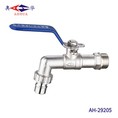
- Brass: Brass gate valves, such as the Brass Gate Valve with Lock, are generally used in low - to medium - temperature applications. Brass has a relatively low melting point compared to other metals, typically around 900 - 940°C (1652 - 1724°F). At high temperatures, brass can lose its strength and integrity, leading to valve failure. So, brass gate valves are not recommended for extremely high - temperature environments.
- Carbon Steel and Stainless Steel: These are more suitable for high - temperature applications. Carbon steel gate valves can handle temperatures up to around 425°C (797°F) in most cases. Stainless steel gate valves, on the other hand, can withstand even higher temperatures, depending on the specific grade. For example, some high - alloy stainless steels can handle temperatures in excess of 600°C (1112°F). The Brass Flanged Gate Valve is made of brass, which is not the best choice for very high - temperature applications, but if you need a valve for a moderately high - temperature system, a carbon or stainless - steel equivalent would be more appropriate.
- Thermal Expansion
High temperatures cause materials to expand. In a gate valve, thermal expansion can lead to several problems. If the valve components expand unevenly, it can cause the gate to bind within the valve body, making it difficult to open or close the valve. This can result in operational issues and potentially damage the valve. To mitigate this, gate valves designed for high - temperature applications are often engineered with special clearances and materials that can accommodate thermal expansion without causing binding. - Sealing Integrity
Maintaining a proper seal is essential for the effective operation of a gate valve. At high temperatures, the sealing materials can degrade. For example, rubber gaskets, which are commonly used in valve seals, may lose their elasticity and become brittle at high temperatures, leading to leaks. Therefore, for high - temperature applications, gate valves use high - temperature - resistant sealing materials such as graphite or ceramic - based seals.
Applications of Gate Valves in High - Temperature Systems
- Power Generation
In power plants, both nuclear and thermal, high - temperature steam is used to drive turbines. Gate valves are used in the steam lines to control the flow of steam. Carbon steel and stainless - steel gate valves are commonly employed due to their ability to withstand the high temperatures and pressures associated with steam. For example, in a coal - fired power plant, the steam generated in the boiler can reach temperatures of up to 540°C (1004°F), and gate valves play a crucial role in regulating the steam flow to the turbines. - Chemical Processing
The chemical industry often deals with high - temperature fluids during various chemical reactions. Gate valves are used to control the flow of these fluids in pipelines. Here, the choice of valve material depends on the specific chemicals and temperatures involved. For instance, in a process where corrosive chemicals are heated to high temperatures, a stainless - steel gate valve with a suitable corrosion - resistant coating may be required. - Oil and Gas
In the oil and gas industry, gate valves are used in high - temperature applications such as in refineries and on offshore platforms. High - temperature crude oil and refined products need to be controlled during the processing and transportation stages. Carbon steel gate valves are commonly used in these applications as they can handle the high temperatures and pressures associated with oil and gas operations. The Water Meter Gate Valve may not be directly relevant to these high - temperature oil and gas applications, but our range of carbon and stainless - steel gate valves can meet the requirements.
Advantages of Using Gate Valves in High - Temperature Systems
- Low Pressure Drop
As mentioned earlier, gate valves offer minimal resistance to fluid flow when fully open. This is particularly important in high - temperature systems where maintaining a consistent pressure is crucial. A low pressure drop ensures that the energy required to move the fluid through the system is minimized, leading to cost savings and more efficient operation. - Full - Flow Capacity
Gate valves provide full - bore flow, which means that the cross - sectional area of the valve opening is the same as that of the pipeline. This allows for maximum flow of high - temperature fluids, which is essential in many industrial processes.
Disadvantages and Limitations
- Slow Operation
Gate valves are typically slower to open and close compared to other types of valves, such as ball valves. In high - temperature applications where quick shut - off may be required in case of an emergency, this can be a drawback. - Susceptible to Erosion
The gate of the valve can be susceptible to erosion from high - velocity and high - temperature fluids. Over time, this can lead to damage to the gate and affect the valve's performance.
Conclusion and Buying Guide
In conclusion, gate valves can be used for high - temperature applications, but careful consideration must be given to factors such as material selection, thermal expansion, and sealing integrity. As a gate valve supplier, we offer a wide range of gate valves suitable for various temperature ranges. Whether you need a valve for a standard plumbing application, as represented by our Brass Gate Valve with Lock, or a high - temperature industrial process, we have the right solution for you.


If you are in the market for gate valves for high - temperature applications, we encourage you to get in touch with us for a detailed discussion about your requirements. Our team of experts can assist you in selecting the most appropriate valve material, design, and sealing options to ensure optimal performance in your specific application. Contact us today to start the procurement process and find the perfect gate valve for your high - temperature needs.
References
- ASME Boiler and Pressure Vessel Code
- API Standards for Oil and Gas Industry Valves
- Valve Manufacturers Association Technical Documents
- Perry's Chemical Engineers' Handbook (for general engineering principles related to high - temperature fluid handling)