


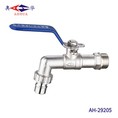


Adjusting the sensitivity of a thermostatic valve is a crucial skill that can significantly enhance the efficiency and comfort of your heating or cooling system. As a seasoned supplier of thermostatic valves, I've encountered numerous clients seeking guidance on this topic. In this blog post, I'll share comprehensive insights on how to adjust the sensitivity of a thermostatic valve, covering the basics, step - by - step procedures, and some practical tips.
Understanding Thermostatic Valves
Before delving into the adjustment process, it's essential to understand what a thermostatic valve is and how it functions. A thermostatic valve is a device that regulates the flow of a fluid (usually water or steam) based on the temperature. It consists of a thermostat, which senses the temperature, and a valve mechanism, which controls the flow.


There are different types of thermostatic valves available in the market. For instance, the Thermostatic Head is a key component that can be adjusted to change the temperature setpoint. The Angled Thermostatic Radiator Valve and Straight Thermostatic Radiator Valve are commonly used in radiator systems to control the heat output.
The sensitivity of a thermostatic valve refers to how quickly and accurately it responds to temperature changes. A highly sensitive valve will make rapid adjustments to the fluid flow when there is a small change in temperature, while a less sensitive valve may take longer to react.
Reasons for Adjusting Sensitivity
There are several reasons why you might need to adjust the sensitivity of a thermostatic valve. Firstly, if you find that your room temperature is fluctuating too much, it could be due to a valve that is either too sensitive or not sensitive enough. For example, an overly sensitive valve may open and close frequently, causing the temperature to rise and fall rapidly. On the other hand, a valve with low sensitivity may not respond quickly enough to changes in heat demand, resulting in a room that is either too hot or too cold.
Secondly, different environments and usage scenarios may require different levels of sensitivity. In a large open - plan area, a more sensitive valve may be needed to maintain a consistent temperature, as there are more factors affecting the heat distribution. In a small, well - insulated room, a less sensitive valve might be sufficient.
Tools Required
Before you start adjusting the sensitivity of a thermostatic valve, you'll need a few tools. These include a screwdriver (usually a small flat - head or Phillips - head, depending on the valve design), a thermometer to measure the temperature accurately, and possibly a wrench if the valve has any nuts or bolts that need to be loosened or tightened.
Step - by - Step Guide to Adjusting Sensitivity
Step 1: Identify the Type of Valve
The first step is to determine the type of thermostatic valve you have. Different valves have different adjustment mechanisms. Some valves have a simple adjustment screw on the thermostatic head, while others may require more complex procedures. Refer to the valve's user manual if you're unsure.
Step 2: Set the Initial Temperature
Use a thermometer to measure the current temperature in the room. Then, set the thermostatic valve to a desired temperature. This will serve as a baseline for your adjustments.
Step 3: Locate the Sensitivity Adjustment Point
On most thermostatic valves, the sensitivity adjustment point is located on the thermostatic head. It may be marked with a small screw or a dial. If you have a Thermostatic Head, carefully examine it to find the adjustment mechanism.
Step 4: Make Small Adjustments
Using a screwdriver or by turning the dial, make small adjustments to the sensitivity setting. If you're increasing the sensitivity, turn the screw or dial in the direction indicated for more sensitivity (usually clockwise). If you're decreasing the sensitivity, turn it in the opposite direction.
Step 5: Monitor the Temperature
After making an adjustment, wait for some time (usually 15 - 30 minutes) and monitor the temperature in the room. Check if the temperature is stabilizing or if there are still fluctuations. If the temperature is fluctuating too much, make further adjustments.
Step 6: Fine - Tuning
Continue to make small adjustments and monitor the temperature until you achieve the desired level of stability. It may take a few attempts to get the sensitivity just right.
Practical Tips
- Keep Records: It's a good idea to keep a record of the adjustments you make and the corresponding temperature changes. This will help you track your progress and make more informed decisions in the future.
- Inspect the Valve Regularly: Over time, the performance of a thermostatic valve may degrade. Regularly inspect the valve for any signs of damage or wear, such as leaks or a sticking valve mechanism.
- Consider the Surroundings: The sensitivity of a thermostatic valve can be affected by its surroundings. Make sure that the valve is not blocked by furniture or other objects, as this can interfere with its ability to sense the temperature accurately.
Conclusion
Adjusting the sensitivity of a thermostatic valve is a skill that can greatly improve the performance of your heating or cooling system. By following the steps outlined in this guide and keeping the practical tips in mind, you can achieve a more consistent and comfortable temperature in your space.
As a trusted thermostatic valve supplier, we offer a wide range of high - quality thermostatic valves to meet your specific needs. Whether you're looking for a Thermostatic Head, an Angled Thermostatic Radiator Valve, or a Straight Thermostatic Radiator Valve, we have the right product for you.
If you're interested in purchasing our thermostatic valves or have any questions about adjusting their sensitivity, we encourage you to contact us for a detailed discussion. Our team of experts is always ready to assist you in finding the best solutions for your heating and cooling requirements.
References
- "HVAC Systems: Principles and Practice" by R. Terry Walker
- Manufacturer's manuals of various thermostatic valves.