


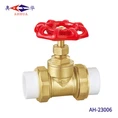
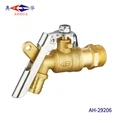

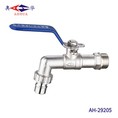
Hey there! As a supplier of Brass Filter Ball Valves, I've been getting a lot of questions lately about the impact - resistance properties of these nifty little devices. So, I thought I'd take the time to break it down for you all.
First off, let's talk about what a Brass Filter Ball Valve is. These valves are a crucial part of many plumbing systems. They combine the functionality of a ball valve, which is great for controlling the flow of fluids, with a filter that helps to trap debris and prevent it from clogging up your pipes. You can check out more about Brass Ball Valve with Filter on our website.
Now, when it comes to impact resistance, brass is a pretty tough material. Brass is an alloy made primarily of copper and zinc, and this combination gives it some great properties. One of the key things that makes brass good at resisting impacts is its malleability. Malleability means that the material can be deformed without breaking. When an impact occurs, instead of shattering like a more brittle material, brass will bend and absorb some of the energy from the impact.
Let's say you're in a situation where there's a sudden surge of water pressure in your plumbing system. This could be due to a pump starting up or a valve closing too quickly. The resulting shockwave can cause a lot of stress on the valves in your system. A Brass Filter Ball Valve made of high - quality brass can withstand this kind of impact. The brass will flex slightly, redistributing the force of the impact throughout the valve body. This helps to prevent cracks or breaks that could lead to leaks.
Another factor that contributes to the impact - resistance of a Brass Filter Ball Valve is its design. These valves are typically well - engineered with thick walls and a sturdy construction. The ball inside the valve is also made to be durable. It's usually machined to a high precision, which means it fits snugly inside the valve body and can handle the forces exerted on it during normal operation and in the event of an impact.


In addition to the material and design, the manufacturing process also plays a role in the impact - resistance of these valves. At our factory, we use advanced manufacturing techniques to ensure that each Brass Filter Ball Valve meets strict quality standards. We start with high - grade brass materials and use processes like forging and machining to create the valve components. This results in a valve that is strong and reliable.
We also perform rigorous testing on our valves. We subject them to simulated impact tests to make sure they can handle real - world situations. For example, we might use a hydraulic press to apply a sudden force to the valve to see how it responds. This allows us to identify any potential weaknesses in the design or manufacturing process and make improvements.
Now, let's compare brass to some other materials commonly used in valve manufacturing. For instance, plastic valves are often cheaper, but they generally have lower impact resistance. Plastic is more brittle than brass, and it can crack or break easily when subjected to an impact. This can lead to leaks and costly repairs. On the other hand, stainless steel valves are also strong, but they can be more expensive than brass valves. And in some cases, the corrosion resistance of brass can be more suitable for certain plumbing applications.
When it comes to the filter part of the Brass Filter Ball Valve, it also needs to be able to withstand impacts. The filter is usually made of a fine mesh or a perforated plate. This filter is designed to trap debris while still allowing the flow of fluid through the valve. During an impact, the filter needs to stay intact so that it can continue to perform its function. The brass frame that holds the filter is strong enough to protect it from being damaged by minor impacts.
In industrial settings, where there are often more extreme conditions, the impact - resistance of Brass Filter Ball Valves becomes even more important. For example, in a chemical processing plant, there could be sudden changes in pressure or temperature, as well as the presence of abrasive chemicals. A valve that can't withstand impacts could fail, leading to dangerous leaks of chemicals. Our Brass Filter Ball Valves are designed to handle these kinds of challenging environments.
In residential plumbing, the impact - resistance of these valves is also beneficial. For example, in a multi - story building, the water pressure can vary greatly between different floors. A sudden change in pressure can cause a shockwave that can damage the valves. A Brass Filter Ball Valve can help to prevent this kind of damage and keep your plumbing system running smoothly.
So, if you're in the market for a reliable valve for your plumbing system, a Brass Filter Ball Valve is a great choice. Its impact - resistance properties, combined with its filtering capabilities and durability, make it a top - notch option for both residential and industrial applications.
If you're interested in learning more about our Brass Filter Ball Valves or are thinking about making a purchase, don't hesitate to reach out. We're here to answer any questions you might have and help you find the right valve for your needs. Whether you're a contractor working on a large - scale project or a homeowner looking to upgrade your plumbing, we've got you covered.
References:
- General knowledge of plumbing materials and valve engineering
- In - house research and testing data from our manufacturing process