


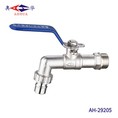


In the realm of plumbing systems, water meter gate valves play a crucial role in controlling the flow of water. Among these, the choice between a rising stem and a non - rising stem water meter gate valve can significantly impact the functionality and usability of the system. As a trusted Water Meter Gate Valve supplier, I've witnessed firsthand the diverse needs of customers and the importance of making an informed decision. In this blog, I'll delve into the differences between these two types of valves to help you understand which one is best suited for your specific requirements.
Rising Stem Water Meter Gate Valve
A rising stem water meter gate valve is characterized by its stem, which rises or extends out of the valve body as the valve is opened. This visible movement of the stem provides a clear indication of the valve's position. When the stem is fully extended, the valve is open, allowing water to flow freely. Conversely, when the stem is fully retracted, the valve is closed, blocking the water flow.
One of the primary advantages of a rising stem valve is its visual feedback. This feature is particularly useful in situations where quick and easy identification of the valve's status is essential. For example, in large industrial plumbing systems or municipal water supply networks, operators can quickly determine whether a valve is open or closed from a distance, which helps in efficient system management and troubleshooting.
Another benefit is the ease of lubrication. Since the stem is exposed, it can be easily accessed for lubrication, which helps to reduce friction and wear between the stem and the packing. This extends the lifespan of the valve and ensures smooth operation over time.
However, rising stem valves also have some limitations. The protruding stem requires additional space above the valve, which can be a problem in installations where space is limited. For instance, in tight crawl spaces or areas with low ceilings, the rising stem may not be practical. Additionally, the exposed stem is more vulnerable to damage from external factors such as physical impact or environmental elements like dust and debris.
Non - Rising Stem Water Meter Gate Valve
In contrast, a non - rising stem water meter gate valve has a stem that does not rise out of the valve body when the valve is opened or closed. Instead, the stem rotates within the valve, and the gate moves up and down along the stem threads. The position of the valve is typically indicated by a pointer or a mark on the valve handle.
The main advantage of non - rising stem valves is their compact design. They require less vertical space compared to rising stem valves, making them ideal for installations where space is at a premium. This makes them a popular choice for residential plumbing systems, where space in basements, utility closets, or under sinks is often limited.
Non - rising stem valves are also more protected from external damage. Since the stem is enclosed within the valve body, it is less likely to be affected by physical impact or environmental factors. This makes them more suitable for harsh or dirty environments, such as sewage treatment plants or industrial facilities with high levels of dust and debris.
However, non - rising stem valves have their drawbacks as well. The lack of a visible stem makes it more difficult to determine the valve's position at a glance. Operators need to rely on the handle position or additional indicators, which can be less intuitive and may require more time to verify. Also, lubrication of the stem can be more challenging since it is not easily accessible. This may lead to increased friction and wear over time if proper maintenance is not carried out.
Comparison in Different Applications
When it comes to specific applications, the choice between rising stem and non - rising stem water meter gate valves depends on various factors.
Residential Plumbing
In residential settings, non - rising stem valves are often preferred due to their compact size. They can be easily installed under sinks, in basements, or in other tight spaces without the need for extra clearance. For example, when installing a PPR Brass Gate Valve in a small bathroom vanity, a non - rising stem valve would be a more practical choice. However, if the homeowner wants a valve with clear visual indication of its position, a rising stem valve could be considered, especially in areas where the valve is easily accessible and there is enough space.
Industrial Plumbing
Industrial applications typically require valves that can withstand heavy use and harsh conditions. Rising stem valves are commonly used in large industrial plants where operators need to quickly identify the valve status for safety and operational reasons. For instance, in a chemical processing plant, a rising stem valve can be easily monitored from a control room or during routine inspections. On the other hand, non - rising stem valves may be used in areas where space is limited or where the valve is exposed to a lot of debris, such as in a mining operation.
Water Meter Installations
For water meter installations, both types of valves can be used depending on the specific requirements of the installation. A Water Meter Gate Valve with a rising stem can provide clear visual feedback, which is useful for meter readers and maintenance personnel. However, if the meter is installed in a confined space, a non - rising stem valve may be more appropriate.
Material and Quality Considerations
Regardless of whether you choose a rising stem or a non - rising stem water meter gate valve, the material and quality of the valve are crucial factors. At our company, we offer a wide range of high - quality valves, including Brass Gate Valve with Lock. Brass is a popular choice for gate valves due to its corrosion resistance, durability, and ease of manufacturing. It can withstand a wide range of water conditions and is suitable for both residential and commercial applications.
We ensure that all our valves are manufactured to the highest standards, using advanced production techniques and quality control measures. This ensures that our valves provide reliable performance and long - term durability, giving our customers peace of mind.
Conclusion
In summary, the choice between a rising stem and a non - rising stem water meter gate valve depends on several factors, including space availability, the need for visual indication, the environment of the installation, and the specific application. Rising stem valves offer clear visual feedback and easy lubrication but require more space and are more vulnerable to external damage. Non - rising stem valves are compact and more protected but may be more difficult to assess visually and require more careful maintenance.
As a leading Water Meter Gate Valve supplier, we understand the unique needs of our customers and can provide expert advice on choosing the right valve for your project. Whether you need a valve for a small residential plumbing job or a large industrial installation, we have the products and knowledge to meet your requirements.


If you're interested in learning more about our water meter gate valves or would like to discuss your specific needs, we encourage you to reach out to us. Our team of experienced professionals is ready to assist you in making the best choice for your plumbing system. Contact us today to start the procurement process and take the first step towards a reliable and efficient plumbing solution.
References
- Parker, R. A. (2009). Handbook of Valves. McGraw - Hill Professional.
- Crane Co. (2013). Flow of Fluids Through Valves, Fittings, and Pipe. Technical Paper No. 410M.